
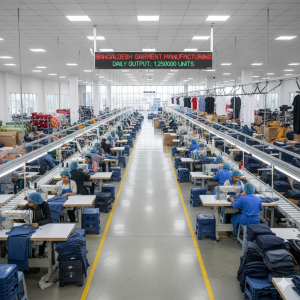
Bangladesh garment manufacturing has transformed the global fashion industry. Consequently, the nation has risen to become the world’s second-largest exporter of Ready-Made Garments (RMG). Moreover, the “Made in Bangladesh” label now represents advanced infrastructure, sustainable practices, and world-class production capabilities.
Over the past three decades, Bangladesh’s textile sector has evolved remarkably. Furthermore, with over 4,000 registered factories and nearly 4.5 million workers, the industry demonstrates how strategic investment drives success. Additionally, Bangladesh now leads the world in LEED-certified green factories, setting new sustainability benchmarks.
This comprehensive guide explores Bangladesh garment manufacturing infrastructure, from vertical integration to green factory initiatives, revealing why global brands increasingly choose Bangladesh as their manufacturing partner.
The Rise of Bangladesh’s Garment Industry
Key Factors Driving Growth
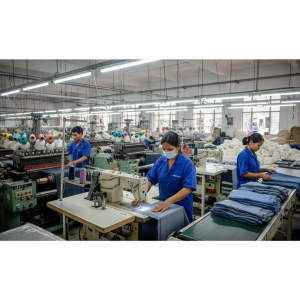
Bangladesh garment manufacturing success stems from multiple interconnected factors. Initially, the industry focused on basic production. However, strategic planning has since elevated capabilities significantly.
Large, Motivated Workforce
Bangladesh’s demographic advantage provides millions of trainable workers annually. Moreover, this workforce has become increasingly skilled in advanced garment manufacturing techniques. Consequently, factories can quickly scale production to meet global demand.
Cost Competitiveness
The country maintains competitive labor costs globally. Therefore, international buyers find excellent value without compromising quality. Additionally, this pricing advantage attracts brands seeking efficient sourcing solutions.
Strategic Government Support
Export-friendly policies have accelerated sector growth substantially. Furthermore, duty-free access to major markets provides significant advantages. Meanwhile, trade associations like BGMEA facilitate international connections effectively.
Rapid Infrastructure Development
Specialized export processing zones support high-volume operations. Similarly, modern textile mills handle complex production requirements. Additionally, integrated supply chains ensure seamless operations throughout Bangladesh garment manufacturing facilities.
Value Chain Evolution
The industry has progressed beyond simple cut-make-trim operations. Instead, manufacturers now offer vertically integrated services. Consequently, they capture higher value throughout the production process.
Vertical Integration and Production Capacity
The Foundation of Competitive Edge
Vertical integration defines modern Bangladesh garment manufacturing. Essentially, multiple production stages occur under one corporate umbrella. Therefore, this approach delivers significant competitive advantages.
The integrated model includes yarn spinning, fabric weaving, dyeing, finishing, and garment stitching. Moreover, controlling these stages internally transforms operational efficiency. As a result, manufacturers deliver superior quality consistently.
Benefits of Vertical Integration
Reduced Lead Times
Internal supply chain control dramatically shortens production cycles. Therefore, factories convert raw cotton to finished apparel rapidly. Furthermore, this speed advantage proves critical in fast-fashion markets.
Enhanced Quality Control
Managing all production stages enables rigorous quality checks. Consequently, Bangladesh garment manufacturing facilities meet exacting international standards. Additionally, buyers receive consistent quality across large orders.
Cost Efficiency
Economies of scale lower overall production costs significantly. Meanwhile, streamlined logistics create additional savings. Thus, both manufacturers and buyers benefit financially.
Currently, thousands of factories operate state-of-the-art machinery. Moreover, they produce millions of high-quality garments monthly. From basic t-shirts to complex outerwear, Bangladesh garment manufacturing handles diverse requirements for major global brands.
Infrastructure Supporting Large-Scale Manufacturing
Industrial Zones and Export Processing
Behind factory walls, comprehensive infrastructure enables large-scale production. Specifically, Bangladesh has developed dedicated zones for garment manufacturing. Furthermore, these areas provide essential services reliably.
These specialized zones offer:
Consistent electricity for continuous machinery operation
Reliable water supply for dyeing processes
Modern waste management systems
Streamlined regulatory frameworks
Port and Logistics Infrastructure
Chittagong Port Expansion
Bangladesh’s primary port has expanded significantly. Consequently, it handles massive textile import and garment export volumes. Moreover, modernization efforts maintain export competitiveness effectively.
Specialized Logistics Networks
Dedicated logistics companies coordinate material movements efficiently. Additionally, inland container depots facilitate smooth customs clearances. Therefore, just-in-time production schedules remain achievable consistently.
Improved Transportation Networks
Highway systems now connect manufacturing hubs directly to ports. Consequently, bottlenecks have reduced dramatically. Furthermore, faster turnarounds support rapid fashion trend cycles effectively.
These infrastructure improvements position Bangladesh garment manufacturing as highly responsive and efficient.
Industry Associations: BGMEA and BKMEA
BGMEA: The Voice of Bangladesh’s Industry
The Bangladesh Garment Manufacturers and Exporters Association (BGMEA) represents the RMG industry comprehensively. Moreover, it serves approximately 4,000 registered factories across multiple sub-sectors.
Key BGMEA Functions:
Establishing connections with international buyers
Facilitating trade negotiations globally
Creating healthy business environments
Supporting foreign exchange earnings
Advancing Bangladesh garment manufacturing standards
BGMEA collaborates with stakeholders internationally. Therefore, the association effectively promotes Bangladesh’s capabilities worldwide.
BKMEA: Championing Knitwear Excellence
The Bangladesh Knitwear Manufacturers & Exporters Association (BKMEA) focuses specifically on knitwear. Furthermore, it emphasizes policy advocacy and sustainable practices.
BKMEA’s Core Activities:
Connecting manufacturers with global markets
Improving standards through training
Advising on environmental efficiency
Supporting research and development
Enhancing garment manufacturing competitiveness
These associations ensure Bangladesh garment manufacturing maintains international excellence consistently.
Human Capital and Compliance
Investing in People and Skills
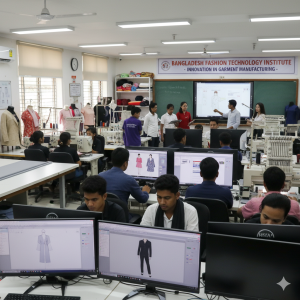
World-class manufacturing infrastructure depends fundamentally on skilled professionals. Consequently, Bangladesh has invested significantly in specialized education.
BGMEA University of Fashion & Technology (BUFT)
This institution trains the next generation of industry professionals. Moreover, programs cover:
Textile engineering
Fashion design
Compliance management
Supply chain optimization
Sustainable manufacturing practices
These educational investments ensure that Bangladesh’s garment manufacturing maintains technical excellence continually.
Safety Culture and Social Compliance
Following major safety initiatives, the industry transformed its safety culture significantly. Therefore, Bangladesh garment manufacturing now emphasizes:
International labor standards adherence
Comprehensive worker safety protocols
Fair wage practices
Regular independent audits
Transparent accountability
These improvements have strengthened international buyer confidence substantially. Furthermore, they position Bangladesh as a responsible manufacturing partner globally.
The Green Manufacturing Revolution
Leading Global Sustainable Production
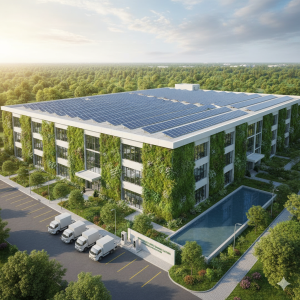
Environmental sustainability defines modern Bangladesh garment manufacturing. Indeed, the country leads the global “Green Revolution” in apparel production. Consequently, it sets new industry benchmarks internationally.
LEED Certification Leadership
Bangladesh hosts the highest number of LEED-certified green factories worldwide. Moreover, these certifications from the U.S. Green Building Council represent rigorous environmental standards. Therefore, this achievement demonstrates Bangladesh’s sustainability commitment.
In fact, the majority of top-rated LEED factories globally operate in Bangladesh. Thus, the country establishes itself as the premier sustainable garment manufacturing destination.
Features of Green Factories
Energy Efficiency
Green facilities maximize natural lighting extensively. Additionally, they integrate renewable energy sources like solar power. Furthermore, smart building designs minimize energy consumption significantly.
Water Conservation
Advanced water recycling systems operate throughout facilities. Moreover, state-of-the-art Effluent Treatment Plants (ETPs) reduce water usage dramatically. Consequently, Bangladesh garment manufacturing addresses historical water footprint concerns effectively.
Worker Well-Being
Green factory designs prioritize employee health substantially:
Superior indoor air quality standards
Optimal ventilation systems
Temperature-controlled environments
Safer working conditions
This focus benefits 4.5 million employees, predominantly women. Therefore, these improvements enhance both productivity and social responsibility simultaneously.
Competitive Advantages
Why Bangladesh Leads Globally
Bangladesh garment manufacturing success stems from interconnected strategic advantages. Consequently, global brands increasingly rely on Bangladesh’s capabilities.
Scale and Speed
Large-capacity factories handle high volumes efficiently. Moreover, integrated processes enable rapid sourcing. Therefore, fast-fashion demands are met consistently.
Quality Controls and Compliance
International brands trust Bangladeshi facilities increasingly. Furthermore, improvements include:
Enhanced factory safety standards
Regular third-party audits
International certifications
Supply chain transparency
Vertical Integration Benefits
Integrated textile mills reduce external dependencies significantly. Additionally, this minimizes supply chain disruptions. Thus, Bangladesh garment manufacturing maintains reliable operations continuously.
Green Manufacturing Leadership
Eco-certified factories attract environmentally conscious brands. Moreover, sustainable practices align with consumer expectations. Therefore, Bangladesh’s green credentials provide significant competitive advantages.
Trade Access Advantages
Duty-free market access maintains competitive pricing effectively. Consequently, Bangladesh remains a preferred sourcing destination internationally.
Conclusion
Bangladesh garment manufacturing infrastructure exemplifies successful industrial transformation. Moreover, strategic investments have created a comprehensive ecosystem supporting global fashion brands.
The country’s capabilities span textile mills, fabric finishing, high-capacity factories, and sophisticated logistics. Furthermore, Bangladesh leads globally in green certifications and sustainable practices.
As fashion evolves and sustainability becomes paramount, Bangladesh positions itself strategically. Rather than competing solely on cost, the nation offers sophisticated, environmentally responsible manufacturing partnerships. Therefore, the “Made in Bangladesh” label now represents quality, sustainability, and reliability internationally.
Tajammul Husain
Email: tktkutir@gmail.com
Website: freelanceworkerbd.com
Note: If you are interested in taking garment manufacturing and shipment from Bangladesh, please see our service page.
=============================================================================================