
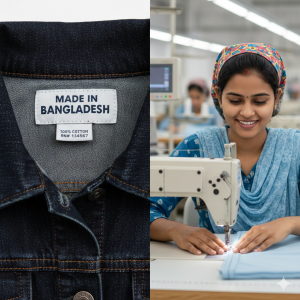
Bangladesh is the Garment Manufacturing Hub. Every day, millions of people worldwide wear clothing manufactured in Bangladesh. From H&M shirts to Zara dresses, from basics to Walmart jeans—the “Made in Bangladesh” label has become ubiquitous in our wardrobes. This South Asian nation has emerged as the world’s second-largest garment exporter, trailing only China.
The ready-made garment (RMG) sector generates over $45 billion annually and accounts for more than 80% of Bangladesh’s total exports. But how did a developing country with limited resources transform into a manufacturing powerhouse that supplies clothes to virtually every major fashion brand? This blog explores the remarkable journey and the factors that made Bangladesh the garment manufacturing hub for global brands.
The Rise of Bangladesh’s Garment Industry
Bangladesh’s garment industry story began modestly in the late 1970s when the first export-oriented factory opened in Dhaka. What started with just a handful of facilities has grown into an industry employing approximately 4 million workers, the majority of whom are women.
The Multi-Fibre Arrangement (MFA), which imposed quotas on textile exports from dominant manufacturing countries, provided Bangladesh with a golden opportunity. As established exporters hit their quota limits, international buyers began exploring alternatives. Bangladesh, with its quota advantages and low labor costs, became an attractive option.
Throughout the 1990s and 2000s, the industry expanded exponentially. Even after the MFA ended in 2005, Bangladesh maintained its competitive edge. Today, the country boasts over 4,500 garment factories, producing everything from basic t-shirts to sophisticated denim products. The transformation from an agricultural economy to an industrial manufacturing hub happened within just four decades—a remarkable achievement by any standard.
Why Global Brands Choose Bangladesh
Competitive Labor Costs
Bangladesh offers some of the most competitive labor costs in the global apparel industry. While minimum wages have increased over the years in response to worker advocacy and international pressure, they remain significantly lower than in most manufacturing nations. This cost advantage allows brands to maintain healthy profit margins while offering affordable products to consumers.
For fast-fashion retailers operating on razor-thin margins, even small differences in production costs can significantly impact profitability. Bangladesh’s pricing structure makes it possible to produce high-volume orders at prices that simply cannot be matched in most other countries.
Large and Skilled Workforce
With a population exceeding 170 million, Bangladesh has an abundant labor pool. The garment sector employs roughly 4 million workers, with women comprising about 60% of the workforce. This has been transformative not just economically but socially, providing income opportunities for women in a traditionally conservative society.
Over the decades, this workforce has developed considerable expertise. Workers and supervisors understand garment construction, quality control, and production efficiency. Factory managers can coordinate complex operations involving thousands of workers producing millions of pieces monthly.
Established Manufacturing Infrastructure
Bangladesh has developed a comprehensive textile and garment ecosystem. The country now has spinning mills, weaving facilities, dyeing and finishing units, and accessories manufacturers—all supporting the final garment assembly.
This vertical integration means brands can source fabrics, trims, and finished products from a single location. It reduces lead times, simplifies logistics, and lowers transportation costs between production stages. Few countries offer this level of integrated manufacturing capability.
Government Support and Incentives
The Bangladeshi government recognizes that the RMG sector is the backbone of the national economy. Consequently, it provides substantial support, including tax breaks, duty-free import of raw materials for export production, and bonded warehouse facilities.
Special economic zones dedicated to textile and garment manufacturing have been established with improved infrastructure. The government has also invested in port facilities and transportation networks to facilitate exports, making it easier for manufacturers to ship products globally.
Improved Compliance and Safety Standards
The tragic Rana Plaza collapse in 2013, which killed over 1,100 garment workers, was a watershed moment for Bangladesh’s industry. The disaster prompted comprehensive reforms in building safety, fire protection, and worker rights.
International initiatives like the Accord on Fire and Building Safety in Bangladesh and the Alliance for Bangladesh Worker Safety conducted thousands of factory inspections and mandated improvements. While challenges remain, these efforts have made Bangladesh factories significantly safer and more compliant with international standards. Many major brands now feel more confident sourcing from Bangladesh than they did a decade ago.
Key Strengths of Bangladesh’s Manufacturing Sector
Vertical Integration Capabilities
Many Bangladeshi manufacturers now offer complete production solutions. They can take a design concept and handle everything from fabric production to final garment assembly, quality checking, and packaging. This one-stop-shop capability is invaluable for brands wanting to streamline their supply chains.
Some larger groups own multiple facilities handling different production stages, ensuring quality control and coordination across the entire manufacturing process. This integration reduces dependencies on external suppliers and improves delivery reliability.
Product Specialization
Bangladesh has developed particular expertise in specific garment categories. The country excels in producing knitwear, basic casual wear, denim products, and activewear. These categories represent stable, high-volume segments of the global apparel market with consistent demand.
Manufacturers have invested in specialized machinery and trained workers specifically for these product types. This specialization means they can produce these items more efficiently and at a higher quality than factories attempting to handle diverse product ranges.
Adaptability to Market Demands
Despite producing millions of basic items, Bangladeshi factories have shown impressive adaptability. When fast-fashion trends shift or brands request modifications, manufacturers can adjust production lines relatively quickly.
The competitive nature of the industry has forced factories to become responsive and flexible. Brands appreciate partners who can accommodate changing requirements without lengthy negotiations or significant price increases.
The Future of Bangladesh’s Garment Industry
Moving Up the Value Chain
Bangladesh is actively working to move beyond basic garment production. Manufacturers are investing in capabilities for more sophisticated products, including performance sportswear, technical textiles, and fashion-forward items that command higher prices.
Training programs are upgrading worker skills, and factories are acquiring advanced machinery capable of handling complex constructions. This evolution will help Bangladesh compete not just on price but on quality and capability.
Leading in Sustainable Manufacturing
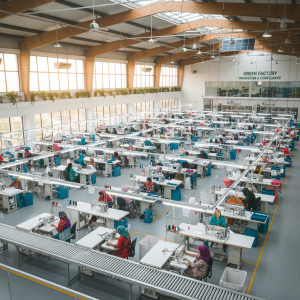
Remarkably, Bangladesh now has more LEED-certified green garment factories than any other country. Forward-thinking manufacturers have invested in solar power, rainwater harvesting, wastewater treatment, and energy-efficient systems.
These green factories demonstrate that sustainable manufacturing is possible even in developing countries. As sustainability becomes a non-negotiable requirement for global brands, Bangladesh’s leadership in green manufacturing provides a competitive advantage.
Diversification Beyond Apparel
The industry is exploring diversification into home textiles, technical fabrics, and accessories. These adjacent categories leverage existing capabilities while reducing dependence on the volatile fashion industry.
Some manufacturers are also moving into direct-to-consumer models and developing their own brands, capturing more value from their production expertise.
Embracing Technology and Automation
While Bangladesh’s competitive advantage has been low-cost labor, the industry recognizes that technology adoption is essential for long-term competitiveness. Factories are gradually introducing automation for cutting, sewing, and finishing processes.
Digital systems for inventory management, quality control, and supply chain coordination are becoming more common. This technological upgrade improves efficiency, reduces errors, and positions Bangladesh for the future of manufacturing.
Conclusion
Bangladesh’s journey from an impoverished agricultural economy to the world’s second-largest garment exporter is extraordinary. The combination of competitive costs, massive production capacity, improving compliance standards, and government support has made it indispensable to global fashion supply chains.
As Bangladesh evolves from a purely low-cost manufacturing hub toward a more sustainable, technologically advanced, and quality-focused industry, it continues to play a critical role in clothing the world. For global brands seeking reliable, cost-effective manufacturing partners, Bangladesh remains a compelling choice.
The story of Bangladesh’s garment industry is ultimately a story about economic development, women’s empowerment, and globalization’s complex impacts. As the industry continues to evolve, Bangladesh remains a fascinating case study in how manufacturing can transform a nation’s economic trajectory.
Tajammul Husain
Email: tktkutir@gmail.com
Website: freelanceworkerbd.com
Note: If you are interested in taking garment manufacturing and shipment from Bangladesh, please see our service page.